
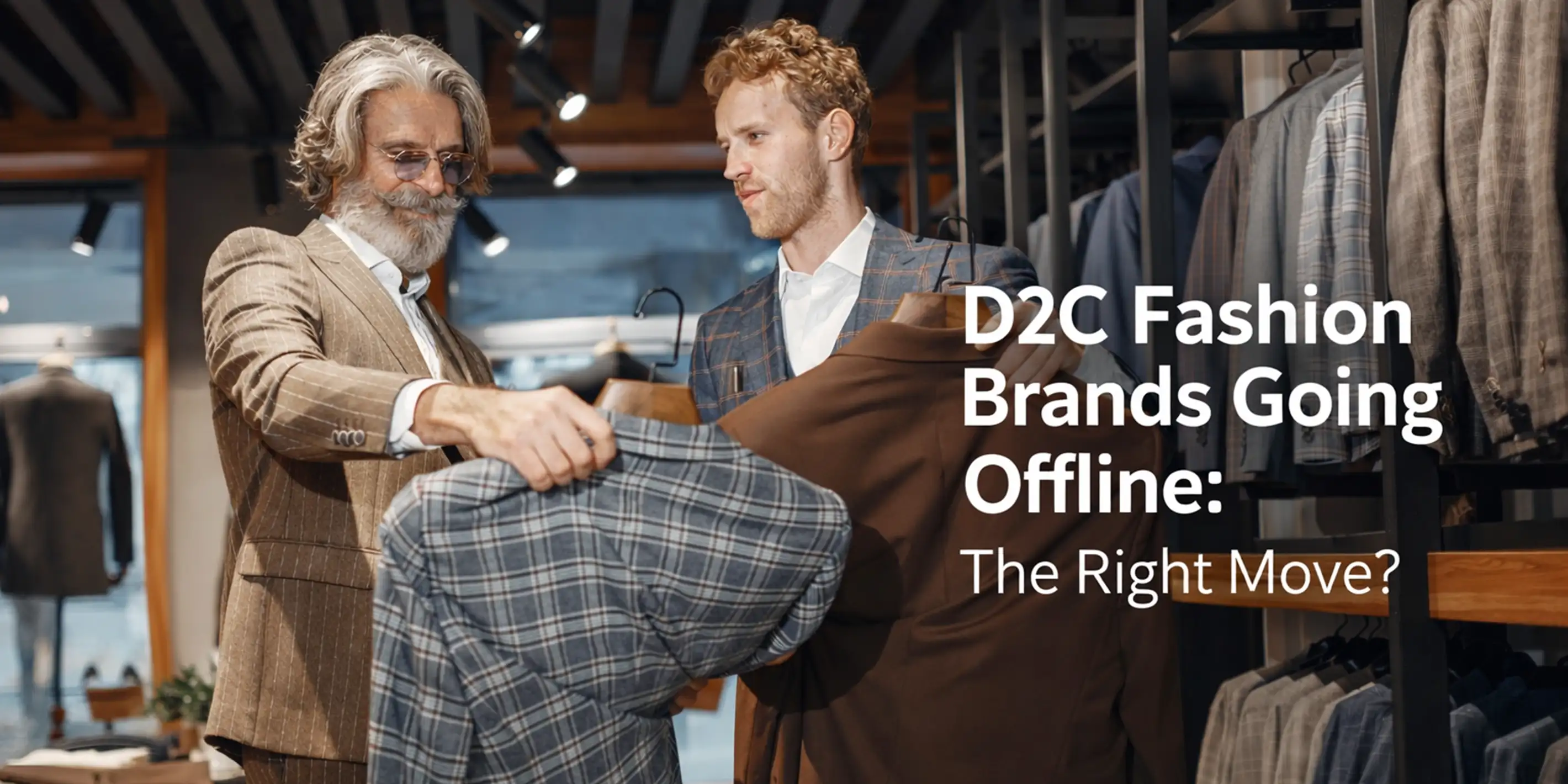
The Big Shift: D2C Fashion Brands Going Offline – Is It the Right Move?
Direct-to-Consumer (D2C) fashion brands have been flourishing online over the years. Online-focused models were very lucrative due to lower overheads, closer customer access, and marketing performance. However, in 2026, an apparent change is occurring -D2C fashion companies are entering physical retail. The offline expansion wave is actual, starting with pop-ups, ending with flagship stores.
The question then arises as to why digital-native brands are allocating resources to physical locations. And is it the right move?
Let’s break it down.
Why D2C Fashion Brands Are Moving Offline in 2026
The competition in the online market is at its highest. The escalating costs of digital advertisements, overloaded social media, and the rising cost of acquiring customers have compelled brands to re-evaluate their growth strategies. Online retail can never duplicate something that can be physically experienced, such as brand experience.
Customers no longer desire only pictures of the products and size charts. They desire to touch clothes, experiment with fits, and feel the atmosphere of the brand. Physical stores remove doubts and enhance purchasing confidence, especially in fashion, where fit, texture, and detailing are critical.
Also, offline shops increase confidence. Face-to-face is a sign of stability and credibility. To most clients, the presence of a shop in an exclusive place gives credence to brand authenticity and brand reliability.
D2C Fashion Stores Expanding Offline: Pros and Cons
Pros
1. Enhanced Brand Experience
The physical stores enable interactive narration. Brands can engage in creating emotional connections beyond a product's list, and this can be through curated interiors as well as personalized styling assistance.
2. Lower Return Rates
In fashion, returns can have a great influence on margins. Fit-related returns are minimized when the customers sample products in-store.
3. Omnichannel Advantage
Offline growth aids in omnichannel strategies buy online, pick up in-store (BOPIS) and in-store transactions, and provides easy returns enhance customer convenience.
4. Greater Average Order Value (AOV)
Basket size is usually larger with in-store upselling and cross-selling than with online purchases.
Cons
1. Higher Operational Costs
Financial strains include rent, employee salaries, bills, and inventory. Store leases are long-term contracts, contrary to digital advertising.
2. Location Risk
Locating the place wrongly may result in low footfall and low ROI.
3. Operational Complexity
The inventory management between online and offline channels needs sophisticated systems and good organization.
Challenges in Shifting D2C Fashion Brands Offline
The switch to physical retail, which is based on a digital-first approach, is not as straightforward as approaching the shop. It demands a mindset shift.
Management of the inventory is complicated. Brands should have a consistent supply of the stocks consistently, without overproduction.
Another challenge is Retail Expertise. Operating stores needs the experience in visual merchandising, employee education, and communicating with customers.
It is also difficult to ensure Brand Identity. An online image-driven brand with few and smooth online images should somehow translate that same image into a real physical venue without being inconsistent.
Besides, there is no direct success online. It is also time-consuming to establish local awareness and consistent footfall. Strategic planning and patience are essential.
Opportunities for D2C Fashion Brands Going Physical
The opportunities are big, though there are challenges.
1. More Intensive Customer Relations.
Offline retailers provide face-to-face interaction. Stylists will be able to mentor customers, gather feedback, and establish loyalty to a greater extent.
2. Experiential Marketing
Retail can be transformed into a hub of experience with stores hosting launch events, styling, community meet-ups, and seasonal drops.
3. Facts-Based Offline Strategy.
The use of digital intelligence in physical retail is introduced through the modern D2C brands. Investigation of the demand patterns over the Internet enables the brands to select the location of the store and manage inventory more efficiently in comparison to traditional retailers.
4. Brand Elevation
Brand positioning is improved through physical presence. A nicely designed store makes the difference between the perception of an online brand and a stable fashion brand.
Is It the Right Move?
The answer depends on strategy, not trend.
Going offline works best for brands that:
* Have strong online demand
* Understand their target geography
* Can maintain consistent brand storytelling
* Are financially prepared for operational costs
For many D2C fashion brands in 2026, offline expansion is not about replacing online sales—it’s about strengthening them. The future is not online versus offline; it’s omnichannel integration.
Brands that blend digital convenience with physical experience are building stronger, more resilient businesses. The big shift isn’t just about opening stores—it’s about creating fashionable statements.
In the evolving retail landscape, D2C brands going offline may not just be a trend. It could be the next strategic evolution.
FAQs
1. Why are D2C fashion brands expanding into physical retail in 2026?
D2C fashion brands are moving offline due to rising digital advertising costs, intense online competition, and increasing customer acquisition expenses. Physical stores allow customers to experience products first hand — touching fabrics, trying fits, and engaging with the brand environment — which builds trust and enhances purchase confidence.
2. Does opening physical stores reduce return rates for D2C brands?
Yes. In fashion, returns are often driven by fit and fabric concerns. Physical stores allow customers to try products before purchasing, significantly reducing fit-related returns and improving overall profitability.
3. What are the biggest challenges D2C fashion brands face when going offline?
Key challenges include higher operational costs (rent, staff, utilities), complex inventory management across online and offline channels, selecting the right store location, maintaining consistent brand identity, and building steady foot traffic in new markets.
4. How does offline expansion support an omnichannel strategy?
Physical stores strengthen omnichannel capabilities such as Buy Online, Pick Up In-Store (BOPIS), easy in-store returns, and cross-channel shopping experiences. This integration enhances customer convenience and increases overall engagement with the brand.
5. Is going offline the right move for every D2C fashion brand?
Not necessarily. Offline expansion works best for brands with strong online demand, clear geographic insights, consistent brand storytelling, and sufficient financial resources. Success depends on strategic planning rather than simply following market trends.


%20fashion%20brands%20have%20been%20flourishing%20online%20over%20the%20years.%20Online-focused%20models%20were%20very%20lucrative%20due%20to%20lower%20overheads,%20closer%20customer%20access,%20and%20marketing%20performa...)